The Role of Checklists in Shutdown Execution: Why They’re Essential
Everything you need is right here.

The Role of Checklists in Shutdown Execution: Why They’re Essential
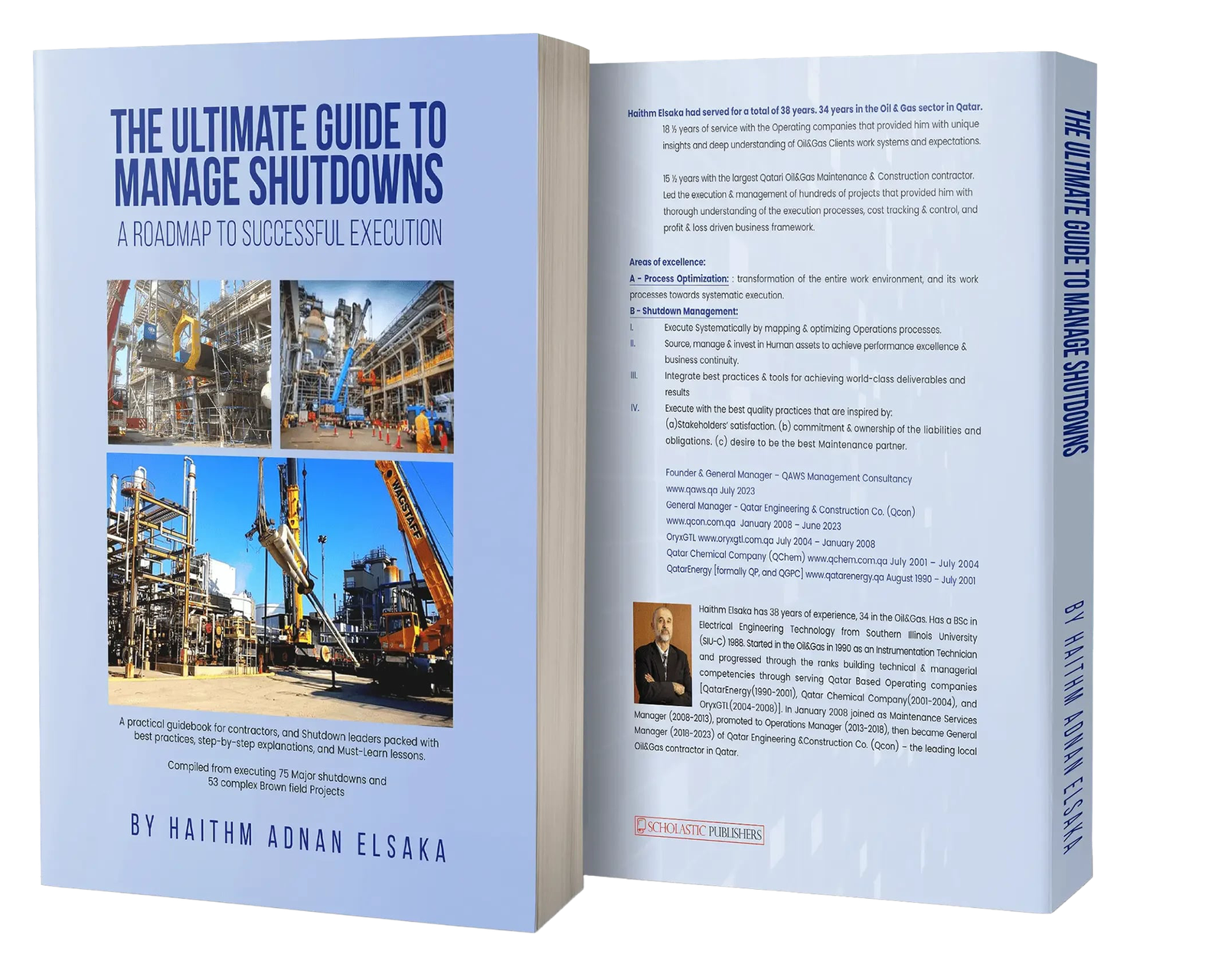
In the high-stakes world of shutdown execution, where efficiency, safety, coordination, and precision are paramount, structured checklists serve as a vital tool for success. In The Ultimate Guide to Manage Shutdowns: A Roadmap to Successful Execution, Haithm Adnan Elsaka emphasizes the importance of using checklists to ensure seamless execution by the different stakeholders across every phase of a shutdown. These checklists act as a structured roadmap, helping the different leaders, PMT members, subcontractors, project managers, and workers stay on track, avoid costly errors, and maintain compliance with safety standards.

Why Checklists Are Critical in Shutdown Execution
Shutdown projects involve numerous concurrent activities, from resource mobilization, prefabrication, subcontractors coordination, to equipment inspections and regulatory compliance. A single missed step can lead to delays, budget overruns, or safety incidents. According to Elsaka, checklists play a key role in reducing these risks by ensuring that every required action is documented, assigned, and completed within the planned timeline.
Shutdowns operate within tight schedules, often requiring thousands of tasks to be completed within weeks. A structured checklist helps keep operations organized and ensures that no step is overlooked. Contractors and project managers can use checklists to break down complex tasks into smaller, manageable actions, making execution more systematic and efficient.
How Checklists Improve Efficiency & quality
One of the biggest challenges in shutdown execution is time management. A well-structured checklist outlines the necessary steps by each leader for each phase of the shutdown, ensuring that tasks are completed in a chronological sequence. This prevents unnecessary delays caused by confusion or last-minute adjustments.
Checklists also streamline communication between different teams. In a shutdown, multiple departments of the Contractor’s organization, subcontractors, and vendors are involved. Without a clear reference point, miscommunication can lead to critical delays. By using a checklist, every stakeholder knows their responsibilities, deadlines, and dependencies, reducing the chances of workflow disruptions. The most significant contribution of the checklist implementation is to enable the different leaders and stakeholders to be aware of the current and upcoming activities of the others. The checklists’ content is shared by all stakeholders. This fosters collaboration and integration that leads to enhanced efficiency & cost savings, especially when it comes to the implementation of the ‘Inspection Test Plan’ (ITP) without wasting time & money waiting for inspection to take place in order for the work teams to move to the next set of activities.
Enhancing Safety Through Checklists
Safety is a top priority in shutdown execution, and checklists play a crucial role in maintaining a secure work environment. Elsaka emphasizes that structured checklists help enforce safety protocols by ensuring that all necessary precautions are taken before, during, and after each task.
For example, before starting work on hazardous equipment, a checklist ensures that all safety measures—such as isolations, permits, and inspections—are in place. By following a structured safety checklist, workers can systematically verify that all potential risks have been mitigated.
Additionally, checklists help standardize safety procedures across different shifts. Since shutdowns often run around the clock, shift handovers can be a point of vulnerability. A well-documented checklist ensures that incoming teams are fully informed of the work completed, the risks identified, and the next steps required, reducing the chances of safety incidents due to lack of information.
Checklists as a Learning Tool
Another advantage of using checklists in shutdown execution is their role in continuous improvement. Each shutdown presents an opportunity to refine processes and incorporate lessons learned. Elsaka highlights that well-maintained checklists serve as historical records that can be reviewed after project completion.
By analyzing completed checklists, shutdown teams can identify areas where execution was delayed, where safety incidents occurred, and where communication gaps existed. This enables project managers to adjust workflows for future shutdowns, leading to ongoing efficiency improvements.
Final Thoughts
In The Ultimate Guide to Manage Shutdowns, Haithm Adnan Elsaka provides a practical framework for executing shutdowns efficiently, with checklists being a central tool in this process. By implementing structured checklists, contractors can enhance efficiency, improve safety, and streamline communication across all project phases.
For shutdown managers looking to optimize their execution strategies, adopting a checklist-driven approach is not just a best practice—it is an essential component of successful project management. Whether ensuring safety compliance, tracking progress, or improving team coordination, checklists provide the structure needed to keep shutdowns on schedule, within budget, and free of unnecessary risks.
Talk to Haithm about your next shutdown
75 major shutdowns and 53 brownfield projects. Short, targeted engagements that move the needle.
We reply within two business day.