Lessons in Shutdown Harmony
Everything you need is right here.

Lessons in Shutdown Harmony
Shutdowns in the oil & gas industry are pressure cookers. Tight timelines, multimillion-dollar risks, and thousands of moving parts create a perfect storm for tension. But when that pressure pits Client against Contractor, the real damage isn’t just to the project—it’s to the working relationship, reputation, and future collaboration.

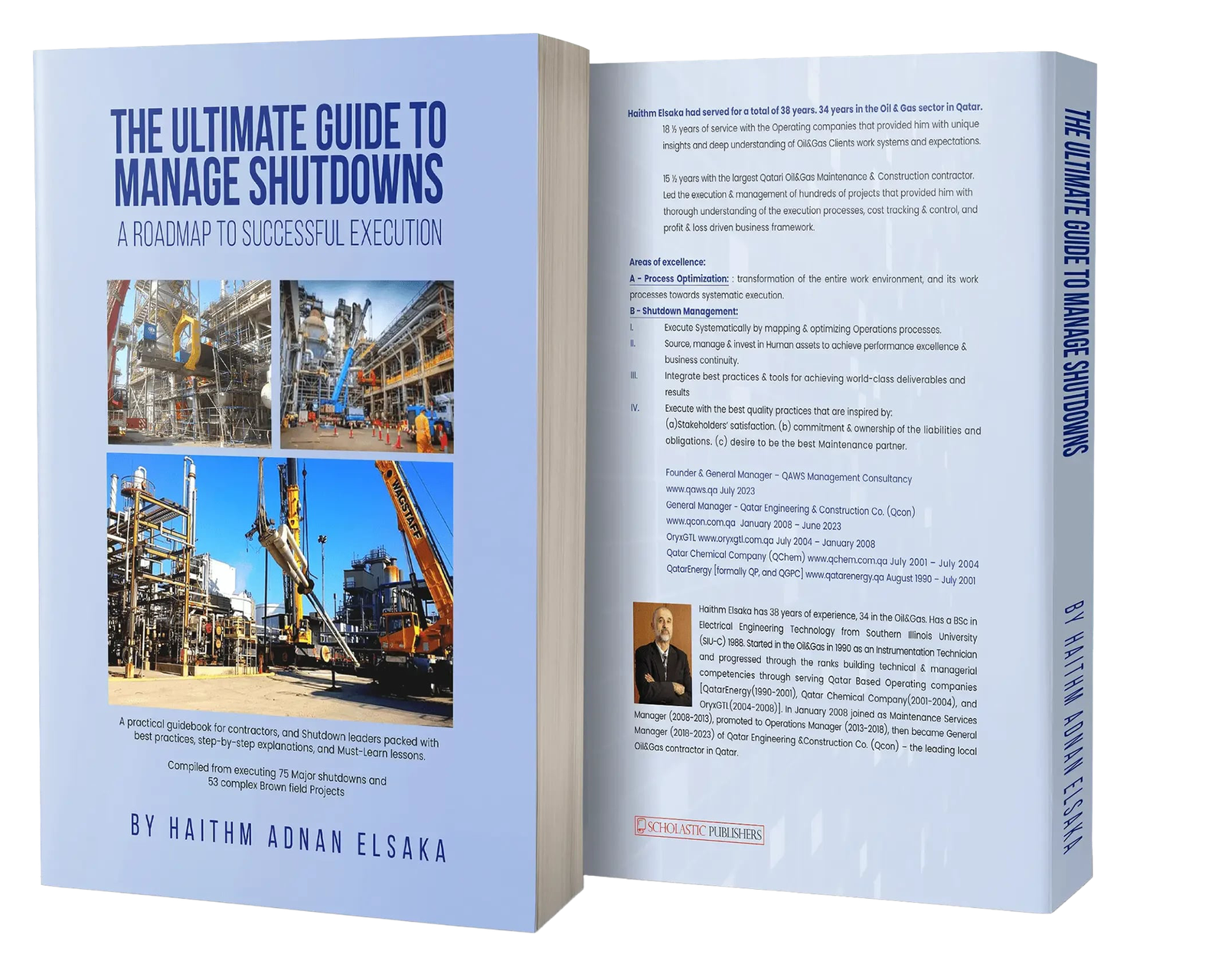
In The Ultimate Guide to Manage Shutdowns, industry veteran Haithm Adnan Elsaka dissects these breakdowns with the precision of a field engineer and the wisdom of a seasoned executive. His firsthand account reveals not only the causes of client-contractor friction but the actionable pathways to transform conflict into collaboration.
Stakeholder Expectations: A Tug of War
At the core of every shutdown is a mismatch of stakeholder goals:
Clients want absolute compliance, safety, and scheduled return to production. Their entire enterprise may hinge on the shutdown’s success.
Contractors seek efficient execution, profitability, and contractual fairness. They face resource pressures, logistical nightmares, and labor volatility.
Elsaka argues that ignoring these diverging priorities is what seeds the roots of most disputes. The solution? Mutual expectation management from day one.
Elsaka’s 5-Step Conflict Prevention Model
Understand the Other Side’s Motives
Clients aren’t “controlling”—they’re accountable for millions in infrastructure. Contractors aren’t “cutting corners”—they’re working with finite tools under brutal constraints.
Align Planning and Execution Teams Early
Early and full integration between both parties’ PMTs (Planning, HSE, QC, Logistics) avoids bottlenecks. When teams operate in silos, gaps form—and projects suffer.
Respect the Contractual Process
Variations, additional scope, manpower shifts—these must be logged and addressed contractually. Avoiding informal agreements keeps both sides protected.
Preempt Friction with Verbal Intelligence
A brilliant anecdote in the book tells the story of a stingy man refusing to give his hand to be rescued. He responds only when told, “Take my hand.” Elsaka’s moral? Language matters. Frame requests in a way that aligns with your counterpart’s perspective.
Act Like a Partner, Not a Provider
Cooperation trumps competition. Even when asked to bail out a competitor contractor, offer help, but do so through structured agreements and formal approvals.
Real Shutdown, Real Conflict, Real Resolution
In one case study, Elsaka recounts a shutdown derailed by delays in scaffolding and vessel release. With the original schedule in ruins, he brought all stakeholders together—client, scaffolding team, inspection subcontractor—and opted to stop work, reassign resources, and defer scope. What could have spiraled into litigation became a model of transparency, risk-sharing, and respectful compromise.
The Takeaway
The lesson from Elsaka’s book is clear: conflict will happen, but how you respond defines the shutdown’s fate. When contractors approach clients with transparency, professionalism, and procedural discipline, shutdowns transform from war zones into well-oiled operations.
The path forward isn’t easy. It demands emotional intelligence, contractual awareness, and an unwavering commitment to collaboration. But as this book proves, those who manage shutdowns with clarity and character will not only survive.
Talk to Haithm about your next shutdown
75 major shutdowns and 53 brownfield projects. Short, targeted engagements that move the needle.
We reply within two business day.