Navigating Client-Contractor Friction in Shutdown Projects
Everything you need is right here.

Navigating Client-Contractor Friction in Shutdown Projects
In the high-stress, high-cost realm of Oil & Gas shutdowns, success demands more than just planning and precision—it demands understanding. One of the most common causes of failure during shutdown execution isn’t a technical error or resource shortage—it’s a conflict between two critical players: the Client and the Contractor.

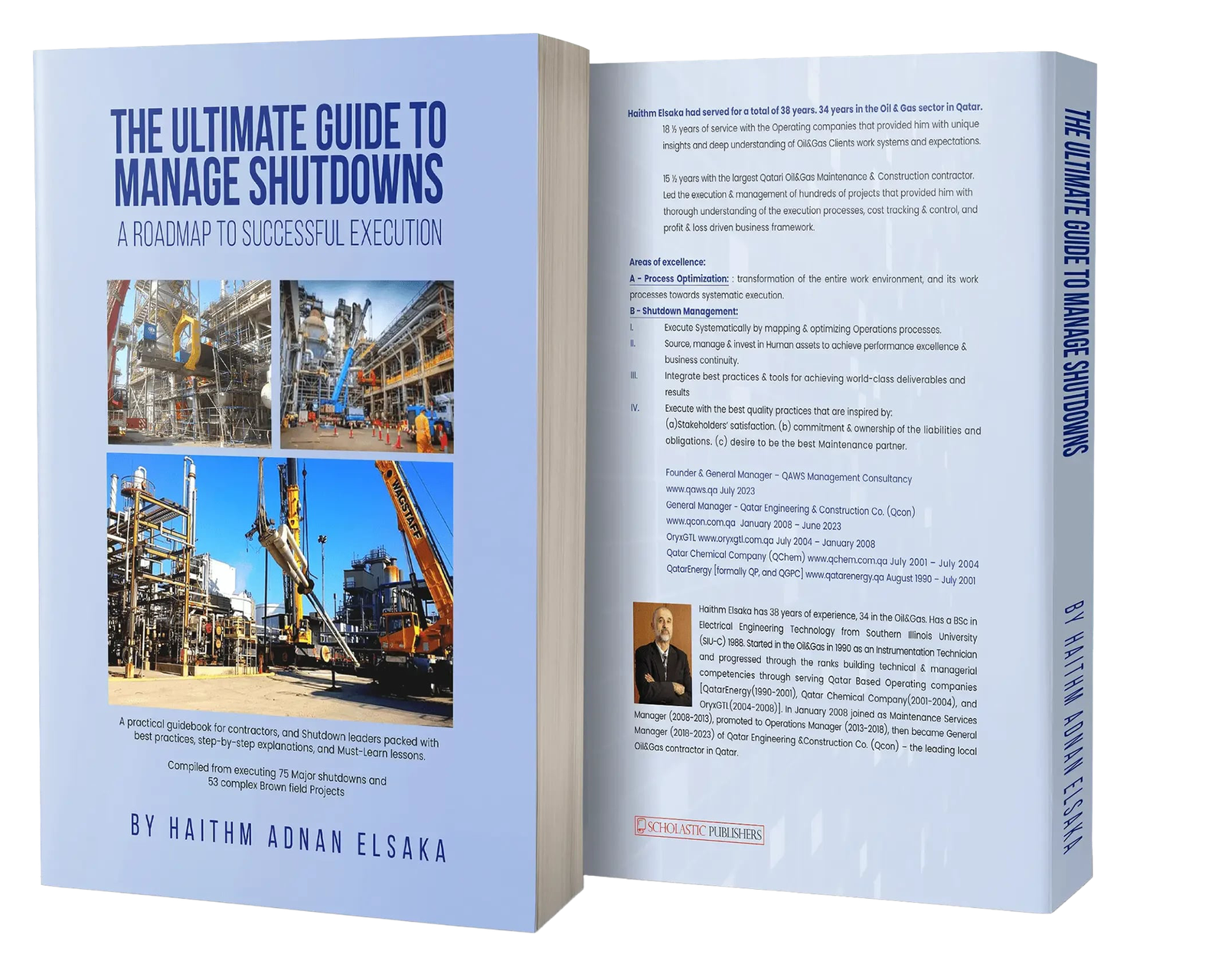
In The Ultimate Guide to Manage Shutdowns, author Haithm Adnan Elsaka pulls back the curtain on the friction that bubbles beneath the surface of shutdowns. With firsthand experience managing over 75 shutdowns and 53 brownfield projects, Elsaka doesn’t just theorize about conflict—he’s lived it. His insights cut to the core of the tensions between clients and contractors, revealing not only the roots of these conflicts but also how to navigate them with professionalism and mutual respect.
Different Worlds, Same Battlefield
The client enters a shutdown with a singular focus: restore the facility safely, with quality, on schedule, and within budget. Their motivations are tied to long-term functionality, reputational strength, safety adherence, and statutory compliance. For them, the shutdown is a strategic reset, often tied to brownfield upgrades, regulatory requirements, and future production increases. The shutdown window may be the only chance in years to implement modifications and maintenance that have been in planning for months, if not years.
The contractor, by contrast, comes in with an entirely different agenda: deliver the contracted work, make a profit, earn the client’s satisfaction, and—if successful—secure future business. Their resources are temporary, mobile, and often expensive. They’re juggling multiple scopes, subcontractors, and vendor relationships under the ticking clock of the shutdown’s mechanical window.
Is it any wonder tensions run high?
Where the Friction Starts
Elsaka identifies a few consistent flashpoints where contractor and client expectations clash:
Demobilization disagreements: Clients fear future issues and resist releasing resources. Contractors aim to reduce costs once the scopes are complete.
Discovery jobs: Clients expect additional work to be done instantly. Contractors can’t pre-mobilize unknown quantities of manpower.
Staffing strategies: Contractors might be tempted to reduce upfront staffing for savings. Clients perceive this as a risk to schedule and safety.
Ambiguous scopes: Poorly defined work leads to last-minute disputes, often around time, cost, and responsibility.
Behind every one of these scenarios lies a fundamental misalignment of priorities.
Haithm Elsaka’s Resolution Playbook
Rather than leave the reader with doom and gloom, Elsaka offers an arsenal of tactical resolutions. His solutions begin with mindset: execution leaders must anticipate conflict and prepare for it proactively.
Key strategies include:
Transparent Communication: Inform early, inform often. Contractors should communicate staffing decisions, delays, and scope concerns in writing and through official channels.
Respectful Negotiation: If requested to support a struggling competitor contractor, document the additional work, negotiate fair terms, and ensure scope clarity before execution.
Contractual Process Discipline: Use the contract’s claims, notification, and variation order mechanisms to avoid informal commitments that lead to later disputes.
Expect Discovery Work: Treat unknown scope as inevitable. Mobilize marginal extra resources and forecast discovery demands based on site history, asset age, and past SDs.
“Walk the Talk” Culture: Both sides must uphold commitments, not just make them. Compliance, professionalism, and zero corner-cutting earn trust.
Elsaka also underscores the importance of de-clashing meetings, especially in large shutdowns involving multiple contractors, to preemptively resolve logistics, crane use, work area conflicts, and manpower overlaps.
Conflict during shutdowns isn’t a flaw—it’s a feature. But friction can be managed. Elsaka has shown, effective shutdown execution isn’t just about project plans—it’s about people, expectations, and the discipline to resolve issues before they explode. That’s the real art of shutdown management.
Talk to Haithm about your next shutdown
75 major shutdowns and 53 brownfield projects. Short, targeted engagements that move the needle.
We reply within one business day.