Shutdown vs. Turnaround: Key Differences and Why It Matters
Everything you need is right here.
Shutdown vs. Turnaround: Key Differences and Why It Matters
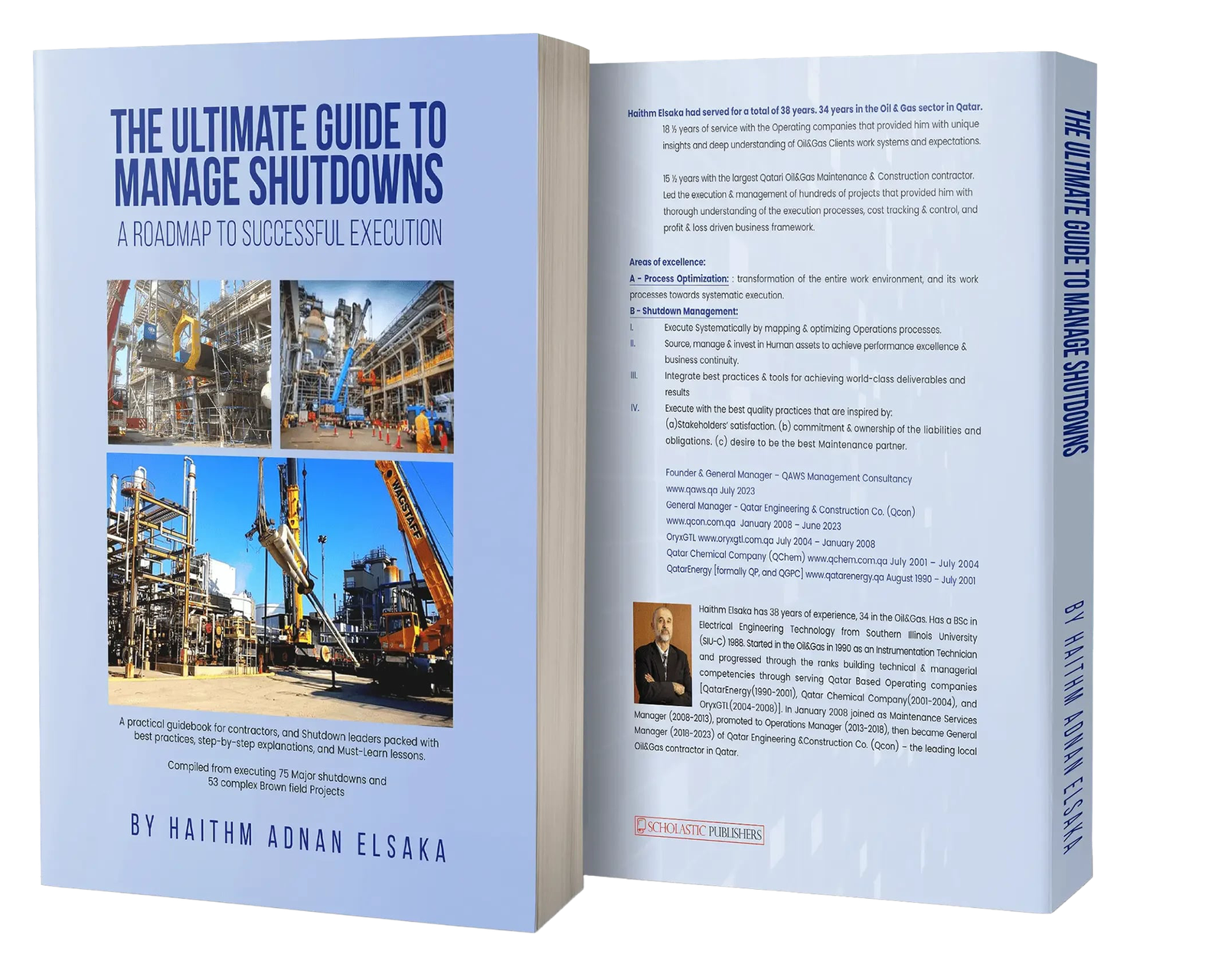
Many professionals use the terms “shutdown” and “turnaround” interchangeably, but in the Oil & Gas industry, they represent distinct project types with unique objectives and planning requirements. In The Ultimate Guide to Manage Shutdowns: A Roadmap to Successful Execution, Haithm Adnan Elsaka provides a contractor-focused perspective on managing these critical events. Understanding the differences between shutdowns and turnarounds is essential for efficient planning, risk management, and cost control.

What is a Shutdown?
A shutdown is a planned or unplanned temporary halt of operations in a facility to perform maintenance, repairs, inspections, or upgrades. It is typically short in duration, lasting anywhere from a few days to a few weeks, and focuses on specific tasks that require the plant to be offline. The primary goal of a shutdown is to restore operations quickly while ensuring the facility remains compliant with safety and operational standards.
According to Elsaka, shutdowns require extensive pre-planning to ensure safety, quality, scheduling, and budget adherence. Contractors must mobilize resources in advance, and detailed checklists help streamline execution. Because shutdowns are often time-sensitive, a well-structured approach minimizes delays and ensures that all necessary tasks are completed within the allocated timeframe.
What is a Turnaround?
A turnaround (TAR) is a more complex and comprehensive shutdown that involves major maintenance, revamps, and equipment overhauls. Unlike a shutdown, which primarily focuses on minor repairs and major maintenance, a turnaround is a large-scale project requiring many months of planning and execution. Turnarounds often include replacing major equipment, conducting system-wide modifications, and performing extensive inspections that go beyond maintenance. Typically a couple of brown field projects would be executed in addition to the shutdown maintenance type scope.
Elsaka highlights that turnarounds require meticulous planning, often beginning years in advance, to secure the necessary equipment, workforce, materials, and approvals. The complexity of a turnaround also demands a higher level of risk management and contingency planning, as delays or cost overruns can have significant financial consequences.
Key Differences Between Shutdowns and Turnarounds
Shutdowns and turnarounds differ in several key aspects. A shutdown is typically short-term, lasting two to four weeks, while a turnaround can last one to three months or more. Shutdowns focus on major maintenance, while turnarounds involve major structural & equipment modifications and system upgrades. Planning for a shutdown generally begins six to twelve months in advance, whereas turnarounds often require one to three years of preparation.
Another major difference is the resource intensity. A turnaround demands a larger workforce, more materials, and higher financial investment compared to a standard shutdown. Due to its complexity, a turnaround carries a higher risk of delays, requiring advanced scheduling and coordination among multiple stakeholders. Elsaka emphasizes that shutdowns are reactive and preventive, whereas turnarounds are strategic and transformative. Contractors and project managers must clearly define the type of event they are preparing for, as this impacts budgeting, workforce selection, & mobilization, and activities scheduling.
Why Understanding the Difference Matters
Understanding whether a project is a shutdown or a turnaround is critical for effective planning and execution. Confusing the two can lead to underestimating the required talent to lead the project, its costs, “productivity” norms applicable, and resource requirements, resulting in project delays and financial losses. Proper classification allows Contractor Management to allocate the right workforce, subcontracted scope & performers, and equipment quantities in order to minimize clashing, minimizing downtime and ensuring that all tasks are completed efficiently.
Haithm Adnan Elsaka’s book provides real-world lessons from executing over 75 shutdowns and 53 brownfield projects, emphasizing why detailed planning and execution strategies are critical to success. Whether managing a short shutdown or a complex turnaround, having a clear understanding of their differences allows teams to optimize execution, reduce risks, and maintain cost-effectiveness.
Final Thoughts
Shutdowns and turnarounds are both crucial to plant operations, but they serve different purposes. While a shutdown is a short-term, maintenance-driven event, a turnaround is a long-term, strategic project that enhances plant capabilities. By following best practices outlined in The Ultimate Guide to Manage Shutdowns, contractors can effectively navigate these projects and ensure successful execution.
Talk to Haithm about your next shutdown
75 major shutdowns and 53 brownfield projects. Short, targeted engagements that move the needle.
We reply within one business day.