The Shutdown A Team — How to Build the Right Team and Get Buy-In
Everything you need is right here.

The Shutdown A Team — How to Build the Right Team and Get Buy-In
A shutdown doesn’t succeed because of one strong leader. It succeeds because of a well-structured, accountable, adequately diversified, and committed team. And that team formation starts from Estimation phase when the SD Contractor submits a strong & competitive bid to the Client
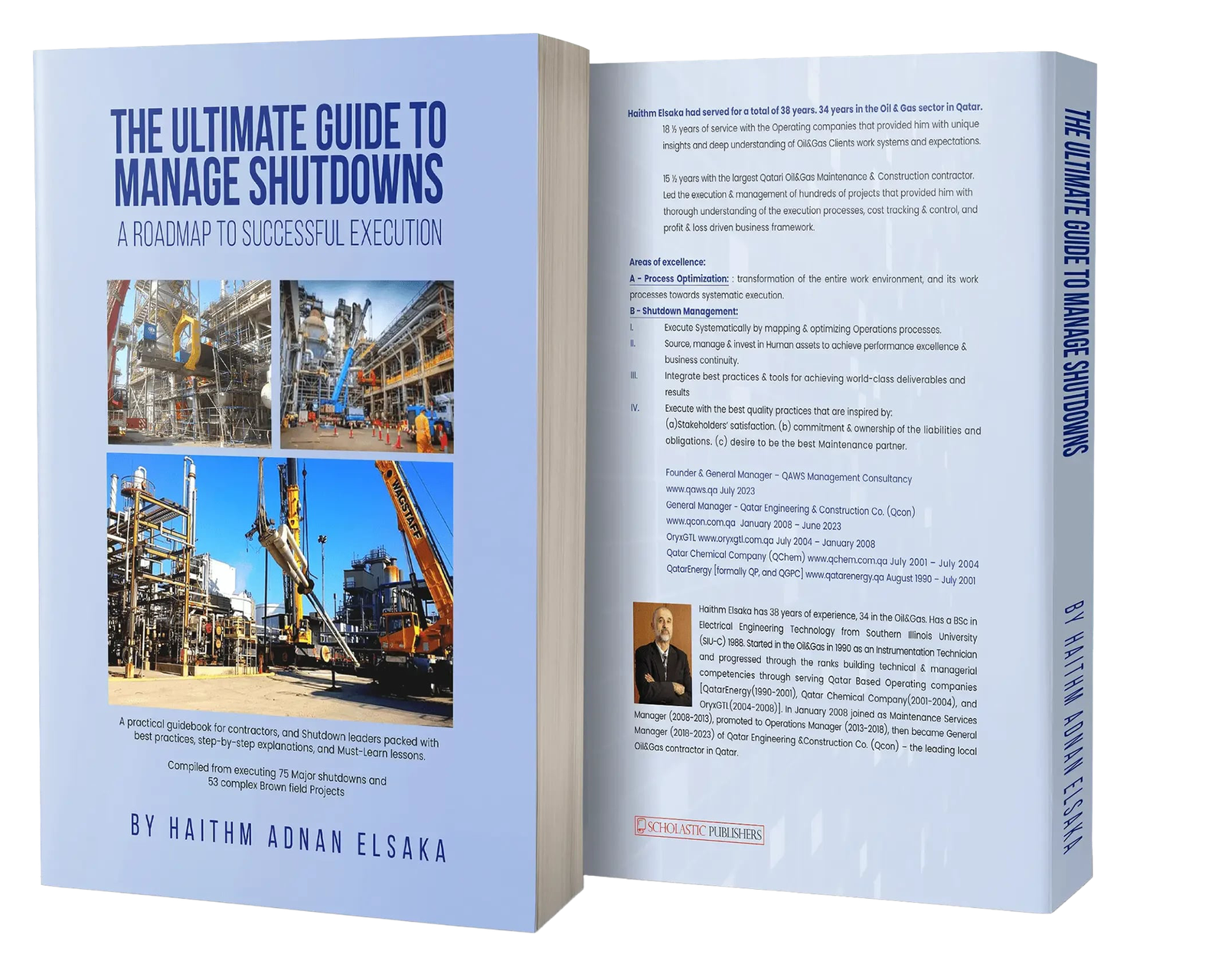
In The Ultimate Guide to Manage Shutdowns, Haithm Adnan Elsaka goes beyond technical procedures. He tackles the people side of turnarounds, which often determines whether the schedule holds or falls apart.

The first step is defining the right team roles to cater for Shutdown projects. Every successful shutdown includes a shutdown manager, planning lead, Quality Assurance & Quality Control professionals, Site Administrator, multidiscipline Execution Leaders, safety coordinator, logistics controller, and the contractual & commercial professionals to enable the execution teams to focus on the SD scope. These aren’t just titles. They carry specific deliverables and accountability. Elsaka stresses the importance of assigning these roles early, so they grow into their responsibilities long before execution.
Next is integrating the roles of the A team through a systematic methodology that will facilitate effective and harmonious execution.
Then, the A team must function with a clear communication and reporting structures. Without them, decisions are delayed, confusion spreads, and risks go unmanaged. Elsaka lays out a tiered communication flow: field crews report to zone leads, who report to area leads, who then report to the shutdown manager. Elsaka recommends treating communication like any technical deliverable: track it, review it, and improve it.
This hierarchy ensures that issues are escalated quickly but without bottlenecks while the set HSE & quality mandates and deliverables are pinned as mandates.
But even the best structure fails without buy-in. Getting team alignment, especially across stakeholders (Client, SD contractor, Subcontractors, and Suppliers), is not automatic. Elsaka advises holding joint meetings, walk downs, Management inspections towards aligning KPIs across groups, and making everyone part of the planning and execution loops. When people feel ownership, they execute with care.
Culture also plays a role. A blame-heavy environment breeds silence and avoidance. A transparent culture, on the other hand, encourages issue reporting, honest progress reviews, and continuous improvement.
Ultimately, a shutdown is a test of team dynamics as much as technical planning. With the guidance of Elsaka’s framework, organizations can transform the shutdown team from a loosely aligned group into a unified command structure — one that communicates, adapts, and delivers while learning and achieving continuous improvements.
If your last shutdown felt like every stakeholder is pulling in a different direction, the investment in A team development concept may be your answer. Structure the team. Set the rules. Lead from the front. The results will speak for themselves.
Talk to Haithm about your next shutdown
75 major shutdowns and 53 brownfield projects. Short, targeted engagements that move the needle.
We reply within one business day.